China Sourcing Strategy 2026: What the 15th Five-Year Plan Changes for Buyers
China's industrial direction is changing, but that does not mean buyers should chase every policy headline or abandon cost control. A practical China sourcing strategy for 2026 starts with a narrower question: what new evidence should an overseas buyer require before selecting a supplier for a more technical product?
China's legislature approved the 15th Five-Year Plan outline for 2026–2030 in March 2026. Official summaries identify new-generation information technology, new energy, new materials, intelligent connected vehicles, robotics, biomedicine, high-end equipment, and aerospace as strategic emerging industries. That is a meaningful signal for advanced manufacturing sourcing, but it is not a list of guaranteed winners—and it does not prove that a specific factory is capable.

Read Policy Direction As A Capability Signal
The useful buyer takeaway is not that traditional manufacturing will disappear. Cost, production capacity, tooling, and delivery remain essential. The change is that more sourcing decisions will involve electronics, software, sensors, energy systems, advanced materials, or tighter integration between them.
Official policy reporting says China intends to accelerate emerging industries and expand the use of new manufacturing technologies and products. For overseas SMEs, this creates more possible supplier routes—but also more ways to misread a polished sample. A product labeled “smart,” “AI,” or “green” may still depend on an unsuitable chip, weak firmware ownership, unclear material traceability, or an untested production process.
Four Changes To Make In Your Sourcing Process
1. Define The Product Roadmap Before Requesting Quotes
Start with the target user, market, required functions, regulatory environment, expected customization, and acceptable trade-offs. For electronics sourcing in China, buyers can first map the relevant electronics sourcing categories, then decide whether the project requires an assembler, an engineering-led manufacturer, a module specialist, or an integration partner.
Without this definition, quotations from different supplier types will look comparable when they are not.
2. Ask Who Controls The Critical Technology
A supplier capability assessment should identify who owns or controls the mechanical design, electronics, firmware, tooling, test specifications, and upstream components. Ask which work is completed in-house, which work comes from partners, and what happens when a key component changes.
This matters in high-tech sourcing in China because the visible shell may reveal very little about the product architecture. Buyers need engineering contacts, change records, component documentation, and test evidence—not only a sales presentation.
3. Use Samples To Test The Process, Not Just The Product
A good-looking sample is only the beginning. Compare sample consistency, document open issues, agree on a pilot run, and define what must be approved before mass production. For connected hardware, review firmware versions, app dependencies, calibration, data handling, and the replacement plan for components with limited availability.
4. Connect QA/QC To Market Fit
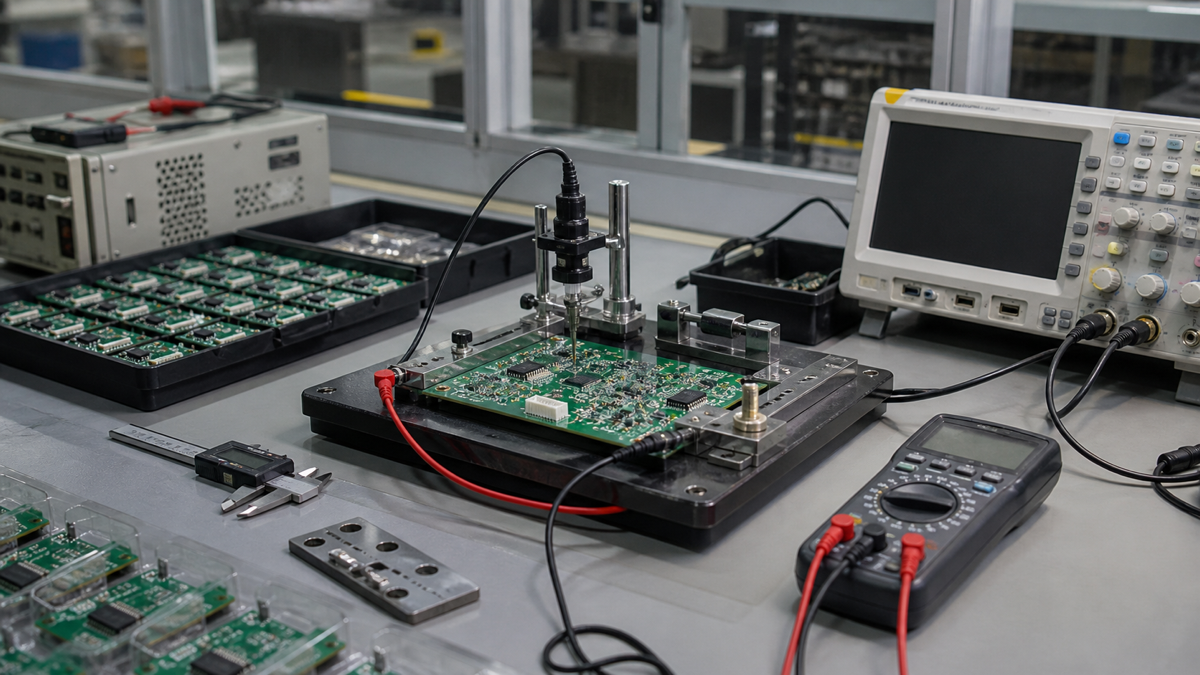
Quality control should trace the product from incoming materials through assembly, testing, packaging, and shipment. It should also reflect the destination market. Instructions, plugs, labels, packaging claims, privacy expectations, and after-sales responsibilities can be as important as the device specification.
A structured supplier screening and factory-verification process can connect these checks. The role of a China sourcing agent or China sourcing company is not simply to find a lower quotation. It is to make product sourcing in China more comparable by verifying the supplier type, technical evidence, production process, and QA/QC plan.
Do Not Turn A National Plan Into A Supplier Guarantee
The 15th Five-Year Plan can help buyers identify where industrial capability and policy attention may deepen. It cannot tell you which factory fits your product, order volume, market, or risk tolerance. That decision still requires product-level evidence and factory-level verification.
For 2026–2030, the stronger sourcing strategy is therefore not “buy whatever is high tech.” It is “prepare to evaluate more technical supply chains.” Keep cost discipline, then add engineering ownership, component control, pilot validation, quality evidence, and market readiness to the decision.
If you are planning a smart hardware, electronics, or advanced-manufacturing project, send CreLink the product brief, including the target market, key functions, expected order range, and validation requirements. CreLink can help map a supplier route and identify the evidence needed before a larger commitment.