Product Sourcing Brief: Turn Customer Problems into Supplier Requirements
“It is too noisy.” “Setup takes too much effort.” “The base does not fit where I use it.” Customer comments can suggest useful product questions, but they are not yet instructions a supplier can quote against.
A product sourcing brief closes that gap. It connects the problem, the use conditions, the proposed requirement, and the evidence needed before approval. For a brand or importer, the goal is not to ask a factory for something vaguely “better.” It is to explain what needs to change and how both sides will judge the result.

AI-generated illustration; not a photograph of an actual CreLink development project.
Start With the Situation Behind the Complaint
Record where feedback came from: a return note, a support conversation, a customer interview, or your own observation. Keep the original wording and describe the product version and use situation. One comment is a lead to investigate, not proof of a market-wide problem.
For example, “difficult to install” leaves several possibilities open. Is the problem unclear instructions, an unsuitable mounting surface, missing accessories, or a task requiring specialist help? Ask follow-up questions before selecting a solution.
If the category is still open, use the product sourcing directory to frame the route. Then narrow the brief to the actual buyer, user, destination market, and purchase stage.
Separate an Outcome From a Preferred Design
Turning customer feedback to product specifications requires a distinction between the desired result and one possible implementation. “Easier to clean” is an outcome. A removable cover might be one proposed solution, but it should not become a requirement before the trade-offs are understood.
Ask suppliers what options they can offer, which require tooling changes, and what evidence would be needed to compare them. Keep non-negotiable requirements separate from preferences. Do not assume that changing one visible part leaves cost, durability, packaging, or other functions unchanged.
For an OEM product brief, identify what is already fixed in the buyer's design and what remains open for technical discussion. If you do not yet know an acceptable threshold, mark it as unresolved rather than inventing a number.
Use a Problem-to-Requirement Record
The following is a buyer-fillable template, not a customer case or a finished engineering specification. Repeat it for each priority problem.
| Field | Buyer and supplier record |
|---|---|
| Observed problem | Original feedback, source, product version, and date: ______ |
| Use conditions | User, environment, setup, operating mode, and constraints: ______ |
| Desired outcome | What must improve; required versus preferred: ______ |
| Evaluation method | Proposed sample check, conditions, acceptance criteria, and reviewer: ______ |
| Open decision | Supplier options, trade-offs, evidence missing, and decision owner: ______ |
Product requirements for suppliers become more useful when each requirement has a reason. A hypothetical desk-fan project, for example, might need a base suitable for a particular shelf. Record the available space and intended use, then ask for options and review the fit. That is more actionable than requesting a “premium base.”
Agree on How Samples Will Be Compared
Supplier sample evaluation should follow the same priorities given in the brief. Record the sample reference, version, conditions, observations, and unresolved questions. Where a check requires qualified testing, agree on the appropriate reviewer rather than substituting a sales demonstration.
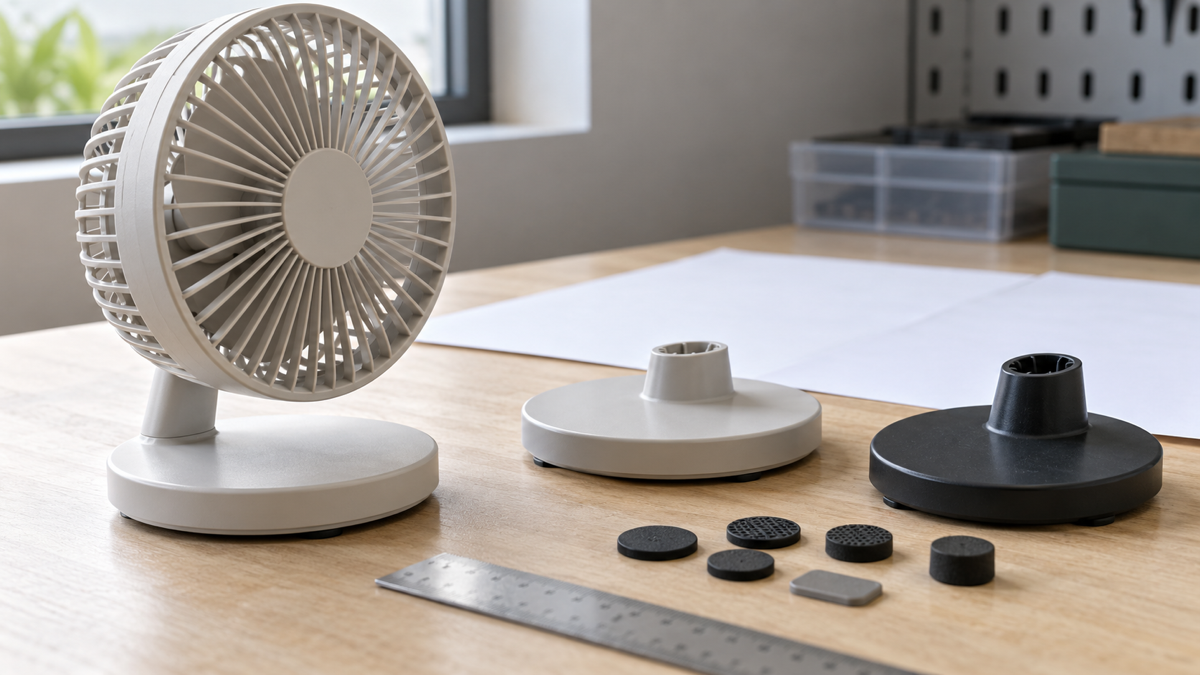
AI-generated illustration; not evidence of measured performance or a completed test.
Ask each candidate to distinguish confirmed capability from a proposal still requiring development. Compare the explanation and supporting evidence, not just how quickly the supplier says yes. If a revision changes the requirement, update the brief so later samples are not judged against an outdated version.
Give Supplier Outreach a Clear Starting Point
A China sourcing agent can help clarify the brief and organize supplier responses. CreLink's China sourcing services include product sourcing and supplier matching, quotation clarification, and OEM/ODM sample follow-up. The scope should match the decision you need; it does not automatically include specialist engineering or legal approval.
For product sourcing in China, share your product direction and unresolved requirements, together with the destination market, expected quantity, and available feedback. A useful first step is to decide what suppliers need to answer before comparing quotations—not to promise a redesign timeline before the problem is defined.