Molded-In Color vs Paint: How Buyers Compare Plastic Finishes
Two plastic samples can look similar while the manufacturing routes behind them differ. One supplier proposes color in the molding material; another quotes a painted surface. Before choosing the lower price, establish what each route includes and whether it meets the same product requirements.
The molded-in color vs paint decision is not a contest between an automatically “modern” and an “outdated” factory. It is a specification, sample, and process-control question. A useful comparison starts with the finish your customer needs, not a supplier's headline claim.
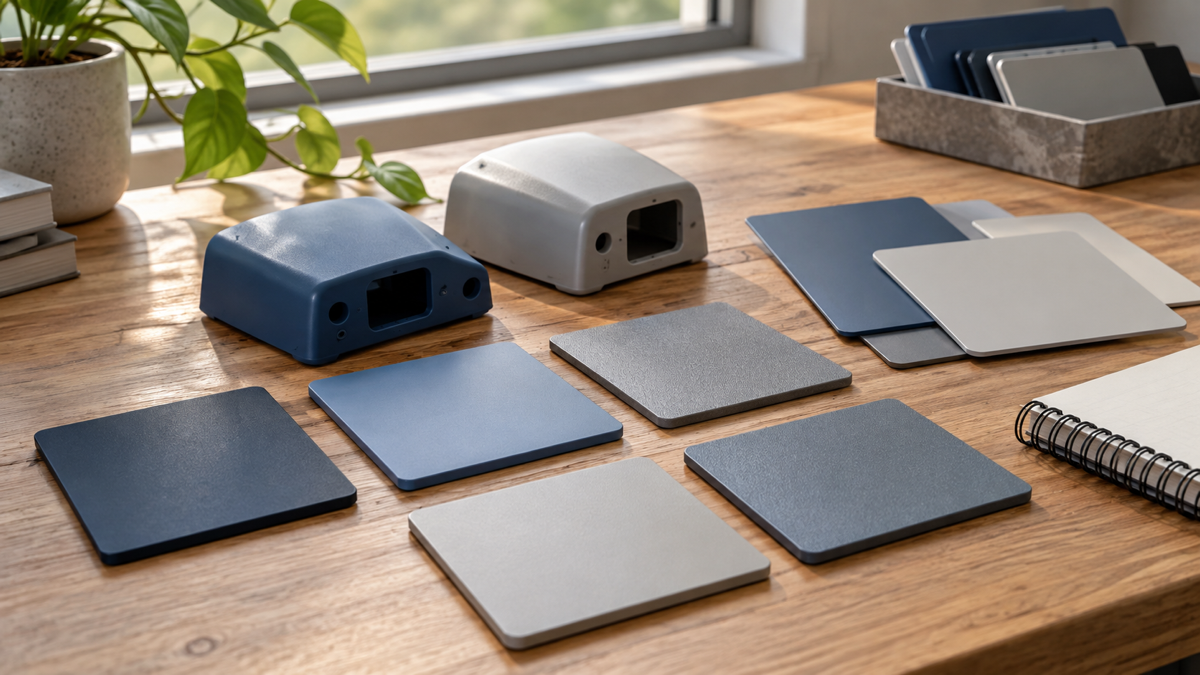
AI-generated illustration; not a photograph of a verified supplier or customer project.
Establish Where the Color Comes From
With molded-in color, the molding material supplies the color rather than relying on a separate painted color layer. Pre-colored materials are an established option: SABIC's COLORCOMP range includes pre-colored thermoplastic resins. Ask your supplier which material and coloring route it actually proposes; a product photograph does not identify either.
Painted plastic parts receive an additional surface finish. That step can have a purpose beyond decoration. Covestro's overview of secondary operations explains that painting and coatings can provide appearance or specific functional effects. That does not establish the performance of your supplier's particular combination of material and coating.
Neither route, by its name alone, proves durability, suitability for a particular user, or a lower total cost.
Define the Appearance Before Comparing Processes
For plastic part finishing, give candidates the same color reference, intended texture, gloss expectation, visible surfaces, and use conditions. Explain whether adjacent parts must match and which differences are unacceptable. If those requirements remain open, keep them open in the quotation rather than assuming both suppliers understood the same target.
For a toy project, the Kids & Toys sourcing category helps frame the application. The actual material, finish, user group, and destination-market questions still need product-specific review. A phrase such as “no paint” is not a substitute for that evidence.
Ask for Comparable Evidence
Use this discussion table to organize supplier answers. It is not a test standard or a statement that either process will pass.
| Decision area | Molded-in color proposal | Painted proposal |
|---|---|---|
| Material and process | Identify resin, color source, and proposed finish | Identify base material, coating system, and application route |
| Appearance reference | Provide a representative molded sample | Provide a representative finished sample |
| Production control | Explain color and material-change approval | Explain material, coating, and finish-change approval |
| Quote scope | List included material, tooling, sampling, and checks | List included finishing, sampling, and checks |
| Unresolved questions | Record evidence still needed | Record evidence still needed |
Plastic color matching should use an agreed reference and viewing conditions, not an unqualified comparison between phone photographs. Ask which sample represents the proposed production route and whether a later change would require another review.
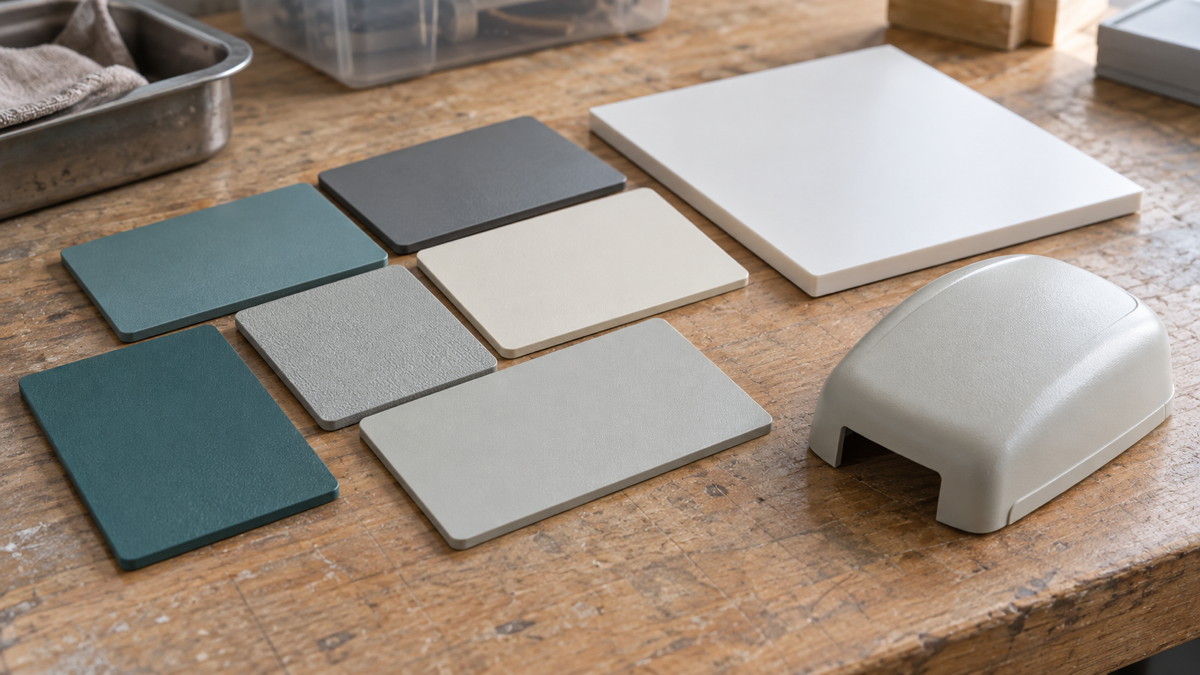
AI-generated illustration; not evidence of a color measurement or durability test.
Approve the Sample and the Change Boundary
Plastic finish sample approval should identify the part, material, process, sample reference, and date. Record the checks required for its intended use and who will review the results. Obtain appropriate specialist input where material safety, coating performance, or market requirements exceed the team's scope.
Keep appearance approval distinct from technical approval. Accepting a color does not mean every property has been verified. Ask the supplier to report proposed changes to the material, color source, coating, subcontractor, or process before treating the revised part as equivalent.
Compare the Complete Proposal
A China sourcing agent can help organize the comparison, but should not declare one route universally superior. CreLink's China sourcing services include supplier matching, specification and document clarification, component comparison, and sample follow-up, depending on the agreed scope.
For product sourcing in China, share your sample or drawing and finishing questions, together with the color reference, target market, and expected quantity. The next step is a clearer route comparison—not a promise of cheaper, faster, or safer production before the evidence is reviewed.