China+1 Quality Control: Protect Your Brand Before Moving Assembly
Introduction
China+1 is not a bad strategy. For many buyers, it can reduce concentration risk and create more flexibility. The problem begins when a company treats it as a spreadsheet decision instead of an engineering and quality control decision.
For electronics, smart hardware, and precision products, the final assembly location is only one part of the system. The real question is: where are the components, tooling, testing knowledge, and problem-solving people?
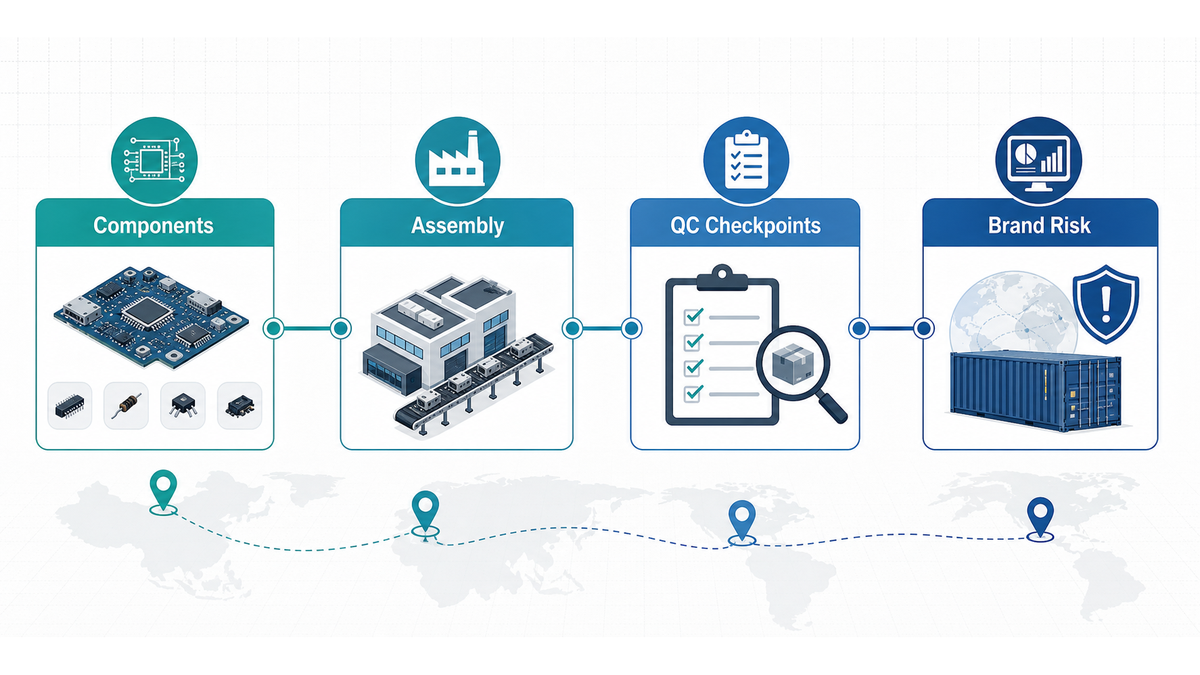
Why Final Assembly Is Not The Whole Supply Chain
A buyer may move assembly to another country and still depend on China for PCBA, sensors, chips, molds, batteries, packaging, and technical fixes. That does not make the strategy wrong, but it changes what buyers must control. CreLink's electronics sourcing categories provide useful context for the kinds of upstream components that may remain distributed across the route.
Strong supply chain management means mapping the full production route. If one country handles key components and another handles final assembly, the buyer needs clear responsibility for fit, tolerance, inspection, and engineering changes. Otherwise, a small component mismatch can become a shipment problem.
The Hidden Risk In Cross-Border Fixes
Dense manufacturing clusters can solve small production issues quickly because engineers, tool shops, component suppliers, and test teams are close together. When assembly moves across a border, the same issue may require messages, translations, sample shipping, customs steps, and deadline pressure.
That is where China Plus One quality control becomes practical. Buyers should not only ask, "Where is the final product assembled?" They should also ask:
- Who owns the BOM and engineering change record?
- Where are critical components sourced?
- Who checks PCB tolerance, casing fit, firmware, labels, and packaging?
- What happens when a defect appears one week before shipment?
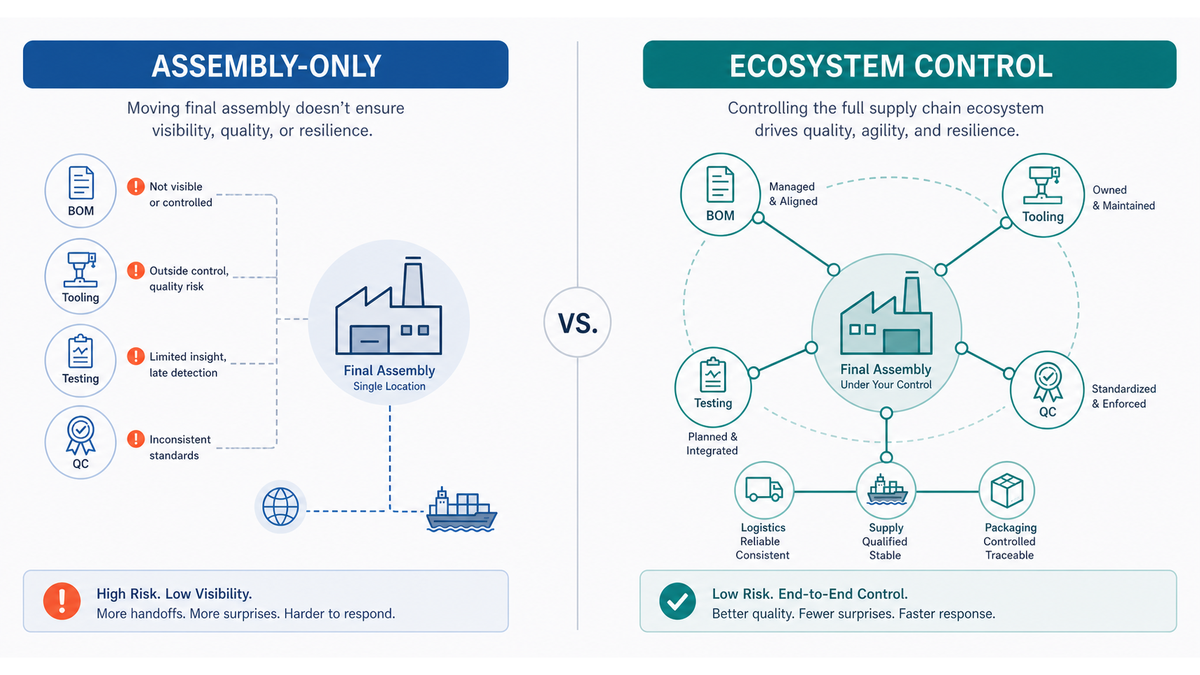
Why A Factory Audit Still Matters
A factory audit and supplier-management review should verify more than a building and a production line. In a China+1 setup, it should check the relationship between the assembly site, China-side suppliers, testing records, and incoming-material control.
For smart electronics, ask whether the assembly factory can identify component changes, isolate defective batches, and communicate technical issues quickly. If the factory only follows instructions but cannot explain the engineering logic, your team may be carrying hidden risk.
Where A China Sourcing Agent Helps
A capable china sourcing agent can help buyers see the production system behind the quotation. That includes identifying which suppliers make critical parts, which factory performs assembly, and where QC checkpoints should sit.
CreLink focuses on physical-level supplier filtering, factory visits, and practical technical interpretation. This can help buyers map China-side components, validate supplier roles, and place inspection checkpoints where responsibility changes.
Call To Action
Before you import from China or move part of your assembly elsewhere, map the real ecosystem. Tariff planning and quality control planning should happen together. If you need a second view of the component, assembly, and inspection route, share the proposed project with CreLink.
FAQ
What is China Plus One quality control?
It means managing quality across China-side components, another assembly site, engineering changes, and final inspection.
Does China+1 always increase defects?
No. Risk rises when buyers move assembly without controlling components, testing, and supplier communication.
Why is a factory audit useful in China+1 sourcing?
It checks whether each factory can control materials, process records, testing, and technical issues.
Who should own quality decisions in a cross-border assembly route?
The buyer should assign clear ownership for the BOM, engineering changes, incoming materials, final inspection, and escalation across every participating supplier.