Home Appliance Manufacturers in China: A Buyer’s Guide to Sourcing Hubs
Searching for home appliance manufacturers in China often begins with a supplier list. A better starting point is the product ecosystem. Air conditioners, refrigerators, microwave ovens, hair dryers, heaters, and kitchen appliances do not rely on the same components, tooling, testing, or engineering skills. The manufacturing hub that fits one category may be a poor route for another.
Locations such as Foshan and Shunde, Zhuhai, Hefei, Zhongshan, and Cixi in Ningbo are frequently associated with different appliance supply chains. Treat these names as a sourcing map to investigate—not as a guarantee that every factory there is qualified.
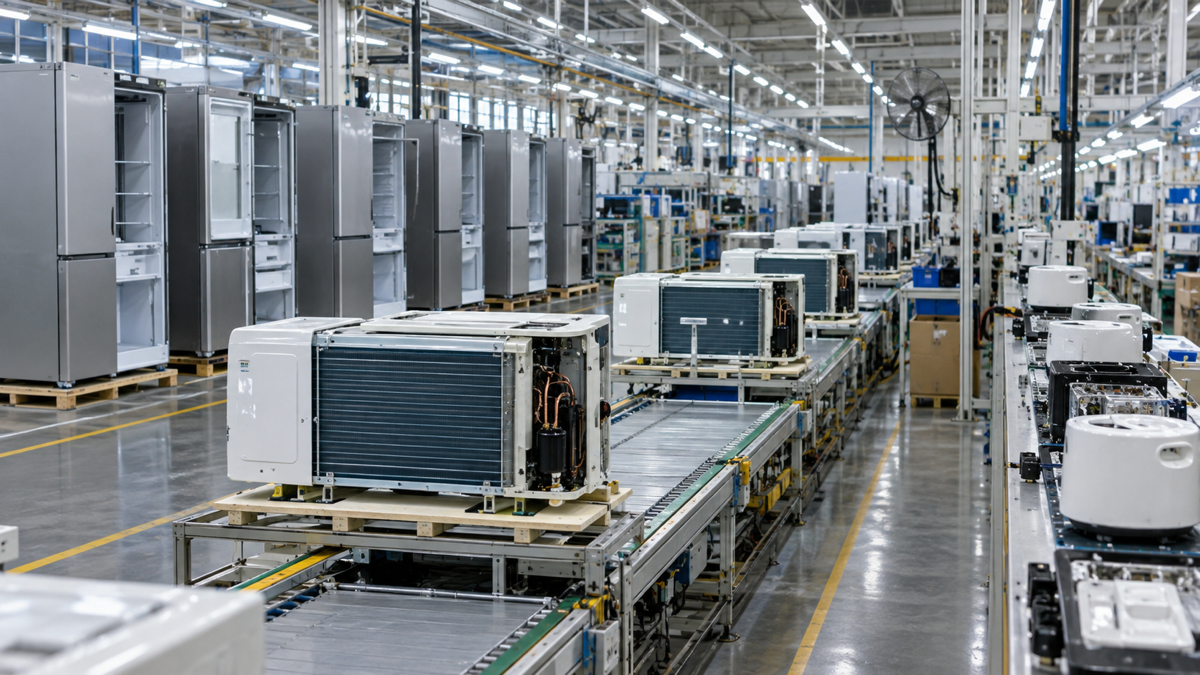
Match the Manufacturing Hub to the Appliance
For home appliance sourcing in China, first classify the product by its critical systems. Cooling products may depend on compressors, heat exchangers, refrigerant controls, sheet-metal work, and energy-performance testing. Microwave and kitchen appliances may require different electronics, cavity fabrication, heating systems, food-contact materials, and safety tests. Small appliances may depend more heavily on compact motors, heating elements, injection-molded housings, switches, and cord sets.
This is why a broad directory of China appliance manufacturing hubs is only the first filter. Buyers should ask whether the local ecosystem supports the exact bill of materials, customization level, target-market standards, and expected order range. CreLink's product sourcing categories can help define the route before individual factories are shortlisted.
How to Compare Regional Supplier Routes
1. Map critical components and tooling
Ask each candidate to identify the source and specification of every risk-bearing component. Clarify who designs, owns, stores, and modifies molds and test fixtures. A dense cluster is valuable only when the buyer can see how the parts and responsibilities connect.
2. Separate factory capability from cluster reputation
A famous location does not prove that a particular supplier can deliver your product. Request business licenses, production records, equipment lists, quality documents, sample evidence, and relevant test reports. Confirm which processes are performed in-house and which are subcontracted.
3. Check target-market compliance early
The required evidence changes by product and destination. Electrical safety, energy efficiency, electromagnetic compatibility, wireless functions, food-contact materials, labeling, manuals, and packaging may all affect the route. Verify the applicable requirements before approving tooling or a golden sample.
4. Test the engineering feedback loop
Give shortlisted suppliers the same brief and open-issue list. Compare how clearly they identify design risks, propose tests, document revisions, and coordinate component changes. This is especially important when evaluating kitchen appliance manufacturers in China or customized products with several interacting systems.
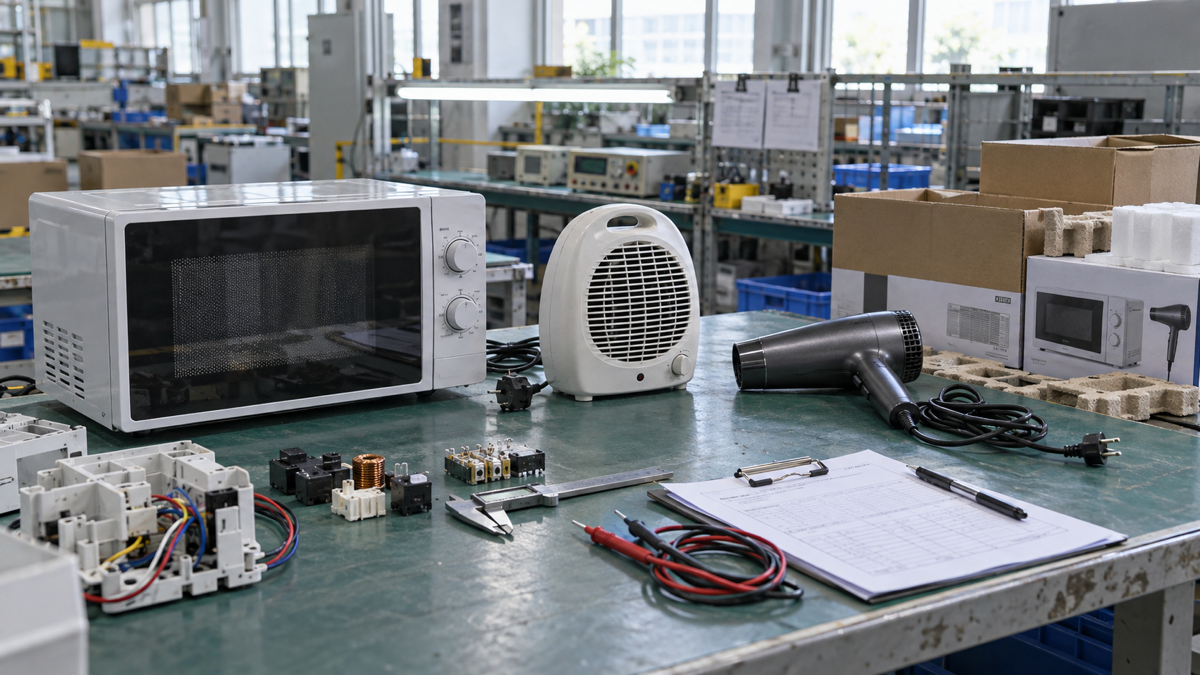
5. Build a quality and backup plan
Define incoming inspection, in-process checks, functional testing, packaging control, defect containment, and corrective action. For critical parts, identify potential alternatives and determine what must be retested before substitution. A nearby backup supplier is not a qualified backup until the evidence has been reviewed.
Compare Complete Routes, Not Just Quotations
The lowest unit price may hide distant component sources, weak engineering support, unclear tooling control, or repeated sampling. Conversely, locating inside a recognized hub does not automatically make a supplier reliable. Compare the complete route: factory capability, component network, tooling, compliance, quality control, communication, logistics, and recovery options.
A capable China sourcing and supplier verification service should make these routes comparable rather than simply forwarding quotations. The role of a China sourcing agent in product sourcing in China is to connect the product brief with the right ecosystem, verify individual factories, coordinate evidence, and keep sampling and QA/QC aligned.
Start With a Product Brief
Before contacting small appliance suppliers in China or larger appliance factories, document the product category, target market, functions, expected order range, customization, critical components, compliance needs, and validation plan. That information is more useful than choosing a city from a headline.
Send CreLink your appliance sourcing brief. We can help assess the likely manufacturing hub, compare supplier routes, and define the verification work required before a larger commitment.