OEM vs ODM: How Buyers Evaluate Smart Hardware Suppliers
Introduction
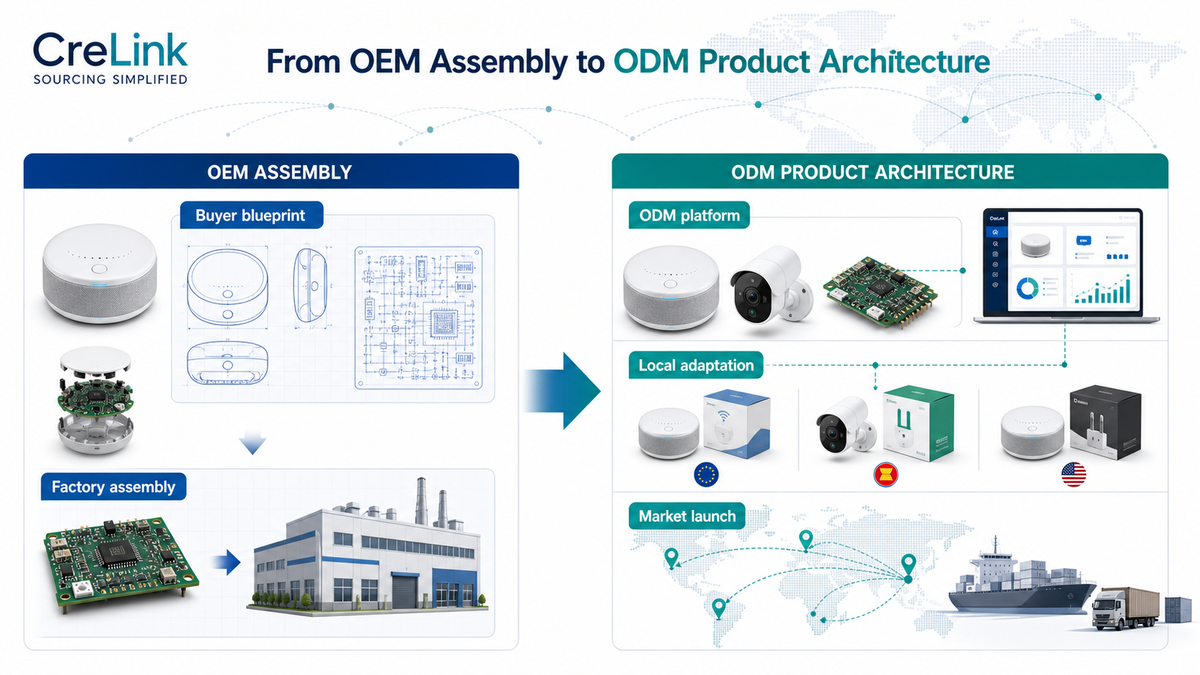
For years, many buyers treated China sourcing as a simple sequence: design the product overseas, send drawings to a factory, negotiate price, then manage assembly. That model still exists, but it is no longer enough in many technology categories.
The practical OEM vs ODM manufacturing decision is whether the project needs an OEM route based on the buyer's completed design, or an ODM route that adapts an existing supplier platform. In smart home, security, and connected-device categories, some factories already have product platforms, module experience, hardware architecture, and software logic that buyers can adapt for local markets.
Why The Old OEM Mindset Creates Risk
The old OEM mindset assumes the buyer owns the idea and the factory only provides labor. That can work for simple products, but it can weaken sourcing decisions when the product depends on sensors, firmware, edge AI, app behavior, connectivity, or user experience.
If a buyer insists on building every technical layer from scratch, they may spend time solving problems an experienced ODM platform has already solved. The result can be slower sampling, unclear specifications, unnecessary tooling, or a product that reaches the market after competitors have moved faster.
For modern Chinese manufacturing, the question is not only "Who can make this cheaper?" A better question is "Which supplier already understands the product logic, and how much of that platform can be adapted safely?"
What Buyers Should Look For In ODM Capability
Not every factory is a strong ODM partner. Buyers still need disciplined screening. A useful ODM evaluation should look at:
- Existing product platforms or mature modules
- Engineering communication and documentation quality
- Similar category experience in security, smart home, or electronics
- Ability to explain trade-offs, not just quote a unit price
- Production process, testing habits, and QC evidence
- Export-readiness, packaging options, and localization flexibility
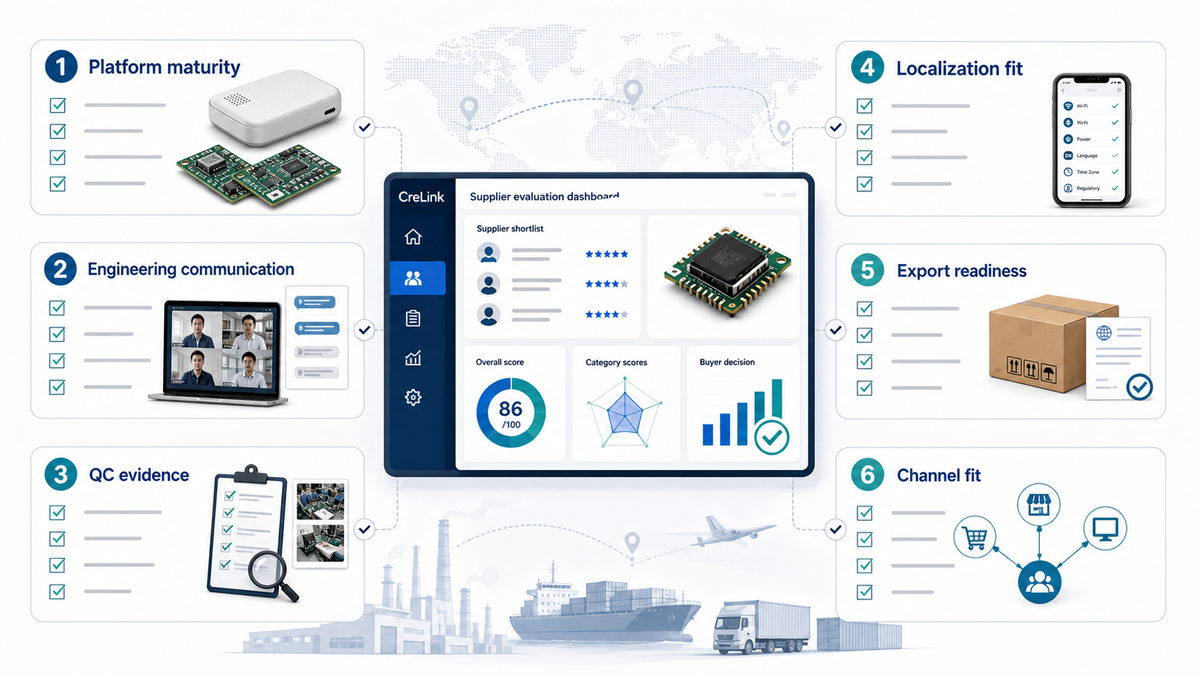
This is where supply chain management and product strategy overlap. A technically strong supplier may still be a poor fit if it cannot support the buyer's channel, packaging, compliance path, quality expectations, or after-sales requirements. CreLink's electronics sourcing categories provide a useful starting point for reviewing relevant product routes.
How Buyers Should Evaluate ODM Partners
A China sourcing company supporting product sourcing in China should help buyers separate real ODM capability from a polished sales claim. A capable China sourcing and customization service should check whether the supplier's architecture is mature, whether the factory can repeat sample quality, and whether the product can be adapted for the buyer's local market.
For a smart home ODM project, this may include comparing device functions, app logic, sensor options, firmware limitations, packaging, manuals, and market positioning. The right supplier is not always the largest factory. It is the factory whose technology, production habits, and business model fit the buyer's launch plan.
CreLink supports overseas buyers through supplier filtering, China industry research, factory communication, customization evaluation, and market-oriented planning. The aim is to identify an OEM or ODM route that fits the product, order stage, and target market.
Turn Factory Technology Into Market Value
ODM sourcing does not mean copying whatever a factory offers. Buyers still need market judgment. A strong local distributor or brand should ask: What feature matters to our customers? What packaging explains the value? What quality checkpoints protect our channel? What claims can we support?
The practical opportunity is to combine China-side technical maturity with overseas market knowledge. Buyers who do this well can move faster without giving up control over positioning, quality, or customer fit.
Call To Action
Treat the OEM-versus-ODM choice as a sourcing decision, not a shortcut. Before choosing a supplier, evaluate the technology platform, factory discipline, localization path, and market strategy together. To compare routes for a specific product, send CreLink the project requirements.
FAQ
What is the difference between OEM and ODM for smart hardware?
OEM usually starts from a buyer-controlled design, while ODM adapts a supplier's existing platform, design, or engineering work for the buyer's market.
Is Chinese manufacturing still mainly low-cost assembly?
No. Assembly remains important, but selected categories now include stronger design, module, and ODM capability.
What evidence should buyers request from an ODM supplier?
Request platform documentation, comparable products, engineering contacts, change records, test evidence, production controls, and clear ownership or licensing terms.
When should buyers choose a smart home ODM partner?
Choose ODM when an existing platform can be adapted faster and safer than designing every technical layer from scratch.