Chinese Supplier Risks: Verify Certifications Before You Import
Introduction
A product with thousands of online reviews can look like an easy win. You see strong sales, contact a supplier, negotiate a wholesale price, and prepare to import from China. But B2C popularity does not automatically make a product safe for B2B distribution.
The real risk starts when your company becomes the importer, distributor, or retail supplier in your market. At that point, a supplier's product photo or uploaded certificate is not enough. You need proof that the exact SKU you import matches the documents, materials, and test reports you rely on.
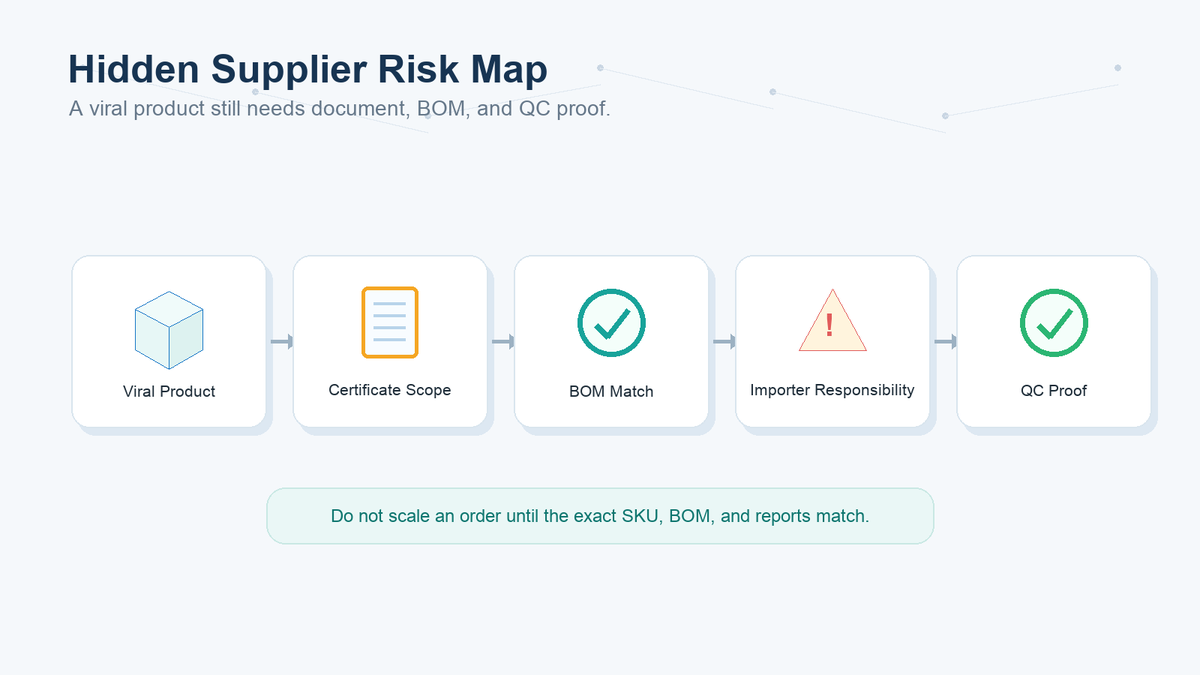
The B2C To B2B Trap
Many buyers discover products through Amazon, TikTok, or other consumer channels. That is useful for market sensing, but it can create a dangerous shortcut. A product that survives on a B2C platform may still fail customs review, retailer QA, or local compliance checks.
One common problem is certificate scope. A PDF certificate may exist, but buyers still need to confirm whether it covers the exact model, components, plug, battery, firmware, label, packaging, and destination-market requirements. These are practical Chinese supplier risks, especially for electronics, smart home devices, and safety-related products. For category-level sourcing context, review CreLink's electronics sourcing options.
Why BOM Matching Matters
The biggest hidden risk is not always the outer shell. It is the bill of materials inside the product.
A supplier may quote a lower B2B price by changing the motherboard, chip, battery, adapter, sensor, or other internal parts. The product may look identical, but the tested version and the shipped version may no longer match. If the lab report is tied to Version A while your container contains Version B, your documentation may not protect you.
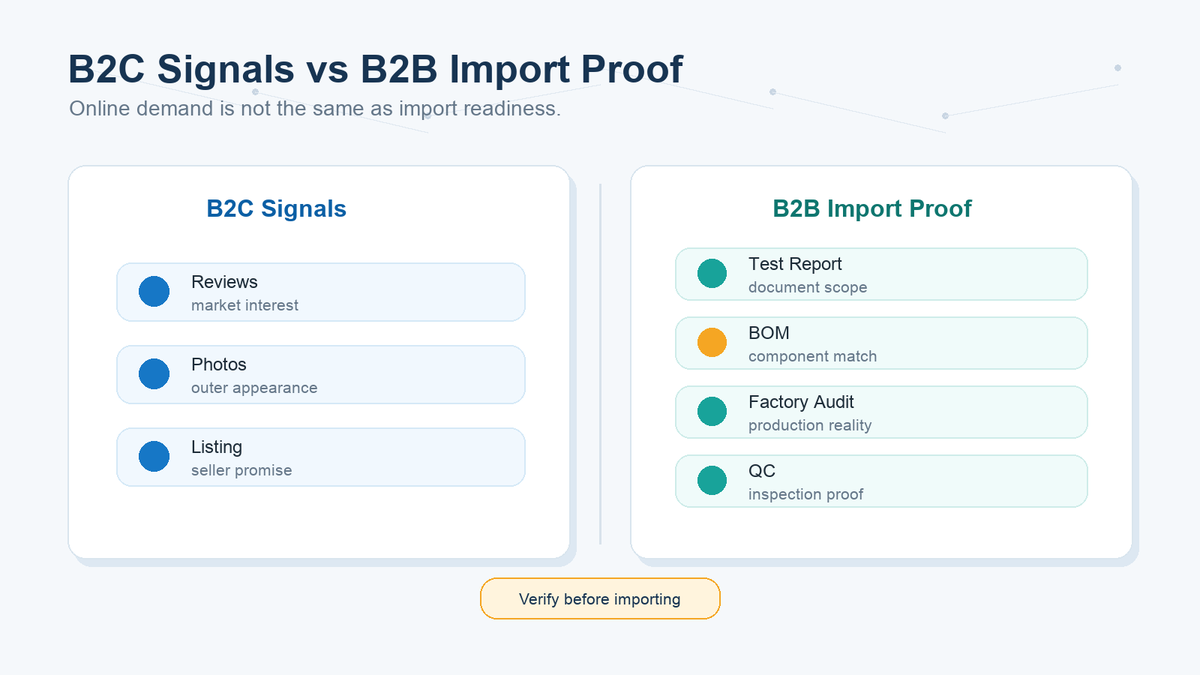
That is why buyers should request test reports tied to the exact physical BOM, not just the product name. Samples, production units, labels, and reports should be cross-checked before bulk orders.
When A Factory Audit Becomes Necessary
A factory audit and supplier verification process is not only about seeing whether a factory exists. For risky categories, it should verify production control, component sourcing, testing equipment, inspection records, and whether the supplier can consistently build the same version you approved.
Strong quality control also needs checkpoints before shipment. Buyers should define what must be inspected: critical components, label accuracy, packaging, safety marks, firmware version, accessories, and final product function.
When A China Sourcing Agent Adds Value
A china sourcing agent adds value when they do more than forward supplier PDFs. They should help verify the physical product, compare documents with the actual BOM, and translate buyer requirements into factory-level checks.
CreLink focuses on physical-level supplier filtering, factory visits, and practical risk review. The purpose is to turn uncertain supplier claims into a verification workflow tied to the actual product and order.
Call To Action
Before you import from China, slow down at the exact point where the deal looks easiest. Verify the SKU, BOM, test report, and production process. If you want CreLink to review the supplier, product documents, and required checkpoints, tell us about the project.
FAQ
What are common Chinese supplier risks?
Mismatched certificates, changed components, unclear factory roles, weak quality control, and unsupported compliance claims.
Why should I check the BOM before importing?
The test report must match the exact components in the product you actually import.
Do I need a factory audit for every order?
Not always. Use one when product safety, order value, or compliance exposure is meaningful.
What should a certificate check include?
Check the model and market scope, then compare the report with the sample, production BOM, labels, and factory records.