Toy Manufacturing Process: How to Select a China Supplier
Searching for a toy factory can produce a long list of toy manufacturers in China. The more useful question is whether a supplier can explain how your specific product will move from concept to a repeatable, controlled production run.
That distinction matters because toy projects can combine plastics, textiles, hardware, electronics, packaging, labels, and age-appropriate design choices. A supplier may be strong for one type of product but a poor fit for another. Treat a manufacturing location or a polished sample as a starting point for investigation, not proof that a factory is right for your project.
Before comparing quotations, define the product route. The Kids & Toys sourcing category is a useful place to frame the product type; your own brief should then identify the intended user, target market, core functions, materials, sample requirements, expected order range, packaging needs, and questions that must be resolved before production.
Start With The Product, Not The Factory List
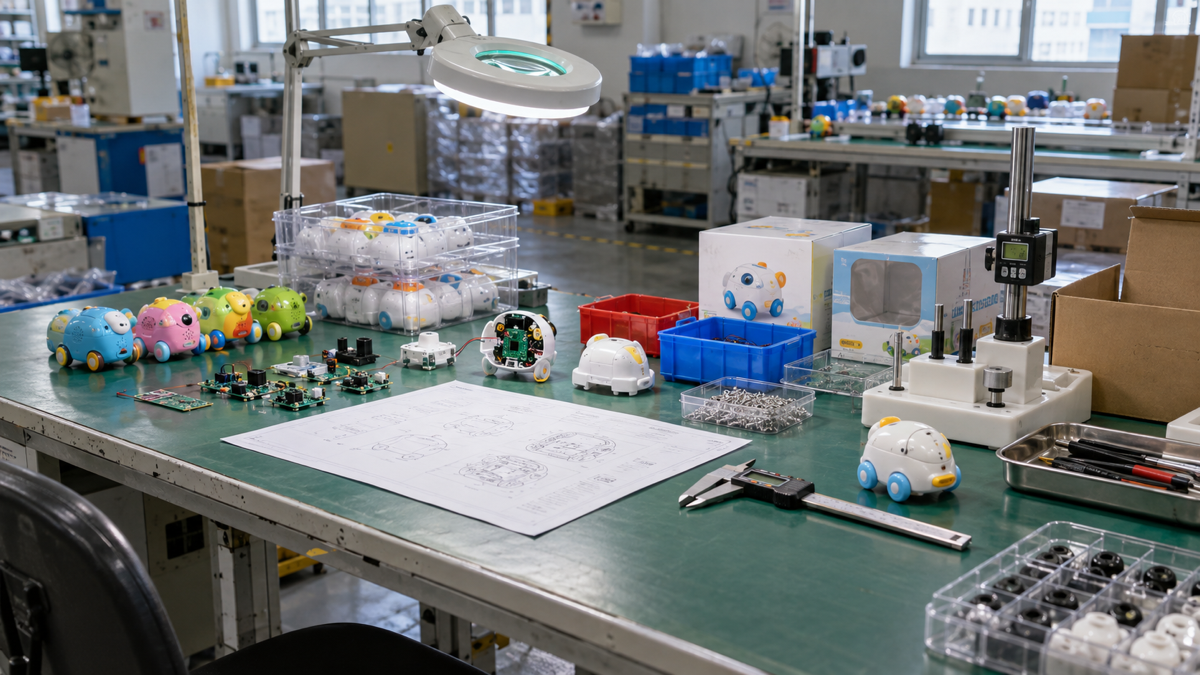
The phrase toy fabrication covers very different production routes. A plush item, a molded plastic product, a wooden learning toy, and an interactive electronic toy may need different suppliers, processes, controls, and evidence.
Give every candidate the same concise product brief. Ask which processes it performs itself, which work is handled by outside partners, and which parts carry the most risk for the design. A clear answer is more useful than a broad statement that a supplier “makes toys.” It lets you compare roles, dependencies, and open questions on the same basis.
Verify Materials And Product Details Early
Early conversations should connect the visible sample to the materials and components behind it. Ask a toy supplier to identify the materials used, any important sub-components, the intended assembly sequence, and the version of the drawing or specification being quoted.
For an electronic or interactive product, clarify the functions that need to be tested and the party responsible for each change. For textile, plastic, or wooden products, clarify the surface finish, construction details, packaging, and how the factory will keep approved samples and production references aligned. The goal is not to create a generic compliance claim. It is to make the product definition precise enough to verify.
Use Sampling To Test The Working Relationship
A sample should test more than appearance. It is a chance to see how a supplier asks questions, documents revisions, handles a problem, and distinguishes an estimate from a confirmed production detail.
Keep a simple record of each sample round:
- What the supplier received in the brief
- What changed and why
- Which material, component, or process needs confirmation
- What is accepted, rejected, or still open
- Who can approve the next revision
This record helps a buyer compare toy supplier verification evidence without relying on memory or a collection of chat messages. It also provides a practical foundation for any later factory visit, sample review, or quality plan.

Make Quality Control And Change Control Visible
Toy quality control is not a single inspection at the end of production. Before a larger commitment, ask how the factory checks incoming materials, production steps, finished goods, packaging, and any recurring defect. Ask where the approved sample is stored, how a material or component substitution is proposed, and who communicates an exception to the buyer.
The answers do not need to be complicated. They should be specific enough that the buyer can see responsibilities and request evidence when needed. A supplier who can describe the process clearly gives you a better basis for comparison than one who only repeats that quality is important.
Turn A Supplier Search Into A Decision Path
The lowest quotation may not show missing information, unclear ownership of changes, or a weak sample process. Conversely, an established supplier may still be wrong for the product, order range, or target market. Compare complete routes: product fit, material and component visibility, sampling discipline, quality checkpoints, packaging, communication, and the next decision required from each side.
A supplier verification service can help make those routes comparable by connecting the brief with supplier screening, factory-level review, sample follow-up, and QA/QC planning. A China sourcing agent should not simply forward prices; the value is in turning supplier claims into an evidence trail the buyer can assess.
If you are planning product sourcing in China, share your toy sourcing brief with the product category, target market, sample requirements, and key quality questions. CreLink can help define a practical supplier-screening and verification route before a larger production commitment.