Low MOQ Manufacturing: Validate Custom Hardware Before Scaling
Introduction
Many hardware founders hear the same warning: custom electronics require a large budget, a high MOQ, and months of tooling before the first market test. That can be true, but it is not the only path.
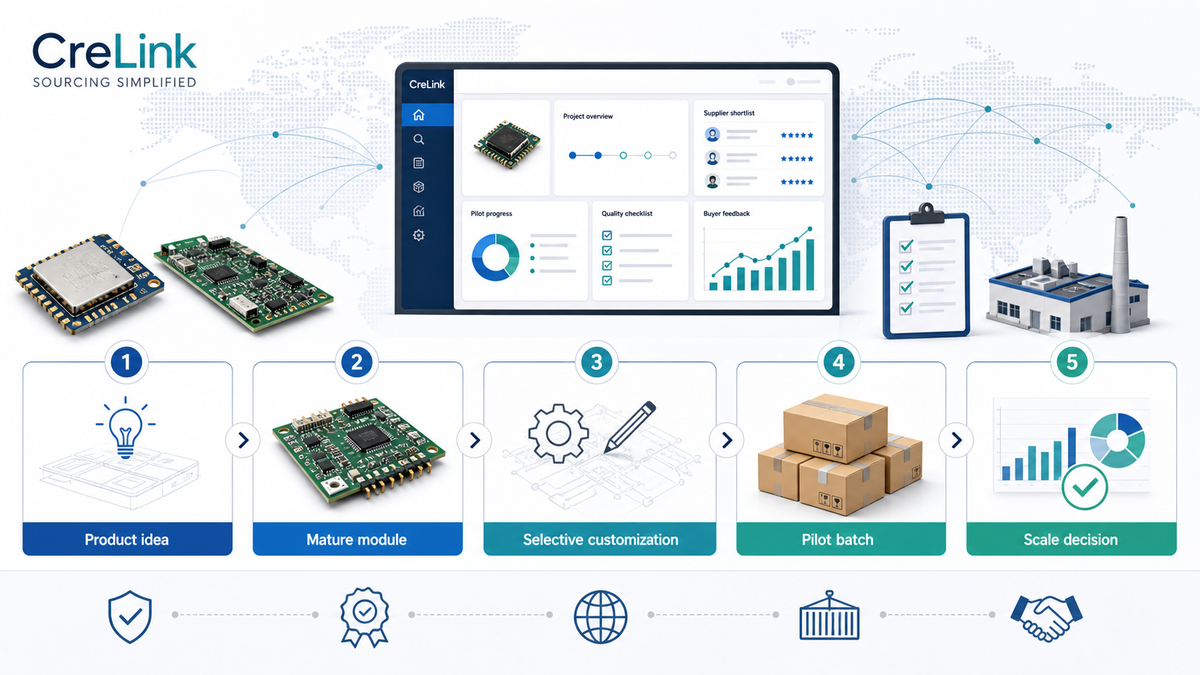
For SMEs, the smarter question is not "How do we manufacture everything from scratch?" It is "Which parts must be customized now, and which parts can stay mature until demand is proven?" Used carefully, low MOQ manufacturing becomes a validation system for custom tech hardware, not a shortcut around engineering discipline.
Why Large MOQs Can Hurt Early Hardware Projects
A high MOQ may look efficient on a spreadsheet, but it can be dangerous before product-market fit is clear. Buyers may lock cash into inventory, pay for unnecessary tooling, or discover too late that the market wants a different feature, housing, package, or price point.
This is especially painful in smart electronics, accessories, IoT devices, and other categories where the buyer's true differentiation may live in the user experience, firmware logic, sensor configuration, or bundled service rather than a fully unique shell.
Small batch product development gives buyers room to test demand, collect distributor feedback, and adjust specifications before scaling. The goal is not to stay small forever. The goal is to avoid a large commitment before the product has earned it.
Customize The Difference, Not Everything
One practical approach is to decouple the hardware platform from the value proposition. If an existing public mold, mature module, or proven housing can support the use case, the buyer may not need to redesign the plastic shell at the pilot stage.
Instead, customization can focus on the parts that affect buyer value. Buyers can use CreLink's electronics sourcing categories to frame which modules or finished-device routes may already exist:
- PCBA layout or component selection where it changes function
- Firmware logic, app behavior, or device configuration
- Packaging, manuals, bundle structure, and localized messaging
- Testing requirements and quality checkpoints for the target market
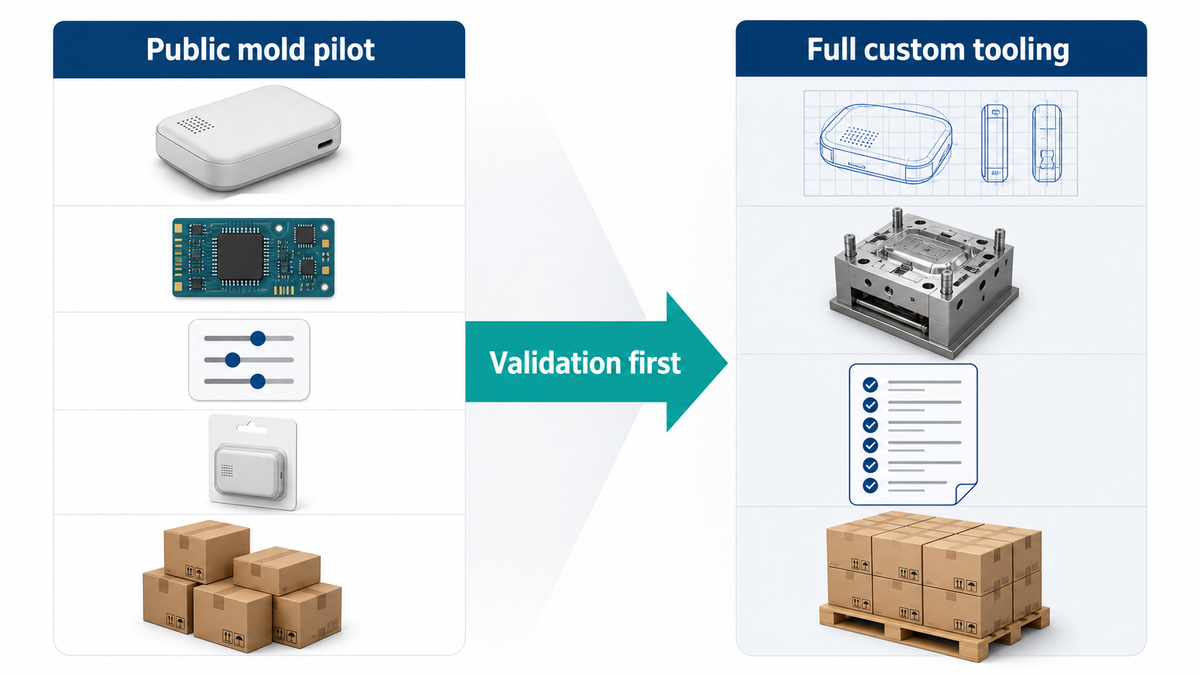
This is where OEM ODM manufacturing should be treated as a design-and-sourcing conversation, not just a price request. A clear product brief helps the factory understand what can be reused, what must change, and what risk should be tested first.
Use Supplier Fit, Not Supplier Size, As The Filter
Large factories are not always the best match for a pilot run, and small factories are not automatically the answer either. The useful filter is supplier fit: category experience, engineering communication, available capacity, sample discipline, and willingness to support controlled iteration.
For a low-MOQ project, a China sourcing agent should connect product sourcing in China with factories whose platforms and capacity fit the pilot. A capable China sourcing and customization service should help buyers look beyond a supplier list: does the factory understand the product logic, do similar modules already exist, and can the supplier explain trade-offs before sampling?
CreLink supports overseas buyers with supplier search, customization evaluation, and factory communication. For custom tech hardware pilots, the first objective is to translate the product idea into requirements that suitable suppliers can evaluate consistently.
Build A Factory-Ready Pilot Run
Before requesting samples, prepare the language a factory can use: product brief, target user scenario, core functions, acceptable alternatives, reference products, test expectations, packaging needs, and planned order path if the pilot succeeds.
The first batch should answer specific questions: Does the feature set solve a real buyer problem? Can the supplier repeat the sample quality? Are the components stable? Is the packaging ready for local distribution? What feedback must be fixed before scale?
Call To Action
Use low MOQ manufacturing to learn before you scale. If your team is planning a smart electronics or hardware customization project, start by defining what truly needs to be custom. Then share the pilot requirements with CreLink for a supplier-fit and feasibility review.
FAQ
What is low MOQ manufacturing?
It means producing a smaller initial quantity so buyers can test demand, specifications, and supplier fit before scaling.
Is custom tech hardware possible without full tooling?
Often yes, if mature housings or modules can be reused while key electronics, firmware, or packaging are customized.
What should a factory-ready pilot brief contain?
Include the target user, core functions, acceptable alternatives, reference products, test expectations, packaging needs, pilot quantity, and the conditions for scaling.
When should buyers choose OEM ODM manufacturing?
Choose it when you need a supplier's existing platform or engineering support adapted to your target market.